Korean Convenience Store Food Guide: What to Buy and How to Eat It
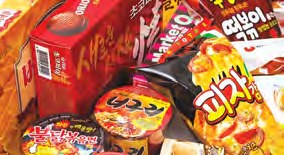
Korean convenience store food can be a useful breakfast, late-night snack, or quick meal—but the best first purchase is not a viral combination. Start with one clear main item such as gimbap, dosirak, or cup ramen, add a drink or small side, and follow the heating label.
Major convenience stores are easy to find throughout Seoul, and many branches operate around the clock. Facilities differ, though: not every shop has seats, a microwave available to customers, or a hot-water machine.
For restaurant and market dishes as well, see our guide to 20 foods to try in Seoul.
Korean Convenience Store Food: Best First-Time Choices
| Food | What it is | How to eat it | Best for |
|---|---|---|---|
| Samgak gimbap | Triangular rice and filling wrapped in seaweed | Follow the numbered wrapper tabs | Fast snack |
| Gimbap roll | Sliced rice roll | Eat cold or heat only if the label says so | Light meal |
| Dosirak | Boxed meal with rice and sides | Remove non-microwave items, then heat as labeled | Complete meal |
| Cup ramen | Instant noodles | Add hot water to the marked line | Late-night comfort |
| Hot-bar | Fish cake, sausage, or fried snack on a stick | Heat according to the package | Warm snack |
On mobile, swipe left or right to view the full comparison table.
How to choose a complete meal
Build a simple three-part meal: one carbohydrate, one protein-rich item, and one drink or fruit. For example, choose a gimbap roll, two eggs, and water; or a dosirak and a small yogurt. This is usually more satisfying than buying several sweets because they look interesting.
- Breakfast: sandwich or gimbap, banana, coffee or milk.
- Lunch on the move: dosirak, water, and a small dessert.
- Late-night meal: cup ramen plus an egg or packaged chicken breast.
- Picnic: gimbap, fruit, chips, and drinks that are easy to carry.
Using the microwave safely
- Check the package for a microwave symbol and the stated time.
- Remove chopsticks, sauce packets, foil, lids, or cold side dishes when instructed.
- Open or peel the lid to the marked line.
- Use the time for the microwave’s wattage if more than one is listed.
- Wait briefly and handle the container carefully; steam can burn.
If you cannot understand the label, show it to the cashier before heating. Do not guess with foil-lined packages or sealed containers.
How to make cup ramen
Open the lid partway, remove the seasoning and any separate packets, add the contents as directed, then fill with hot water to the line inside the cup. Close the lid and wait for the printed number of minutes. Some products require draining water; look for perforated drain holes and clear illustrations.
Do not microwave an ordinary foam noodle cup unless the package explicitly says it is microwave-safe. The hot-water method is the default.
Easy combinations worth trying
- Ramen and triangle gimbap: a classic filling pair.
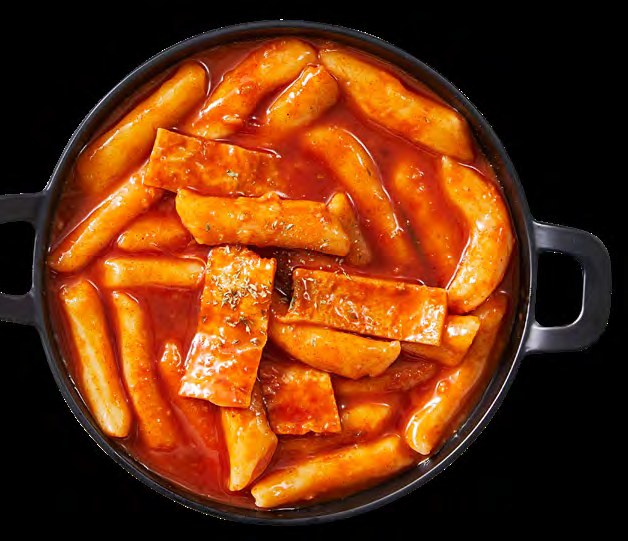
- Tteokbokki and cheese: add cheese only if the package heating instructions allow it.
- Dosirak and cup soup: useful on a cold day.
- Banana milk and a simple pastry: a sweet snack rather than a full meal.
- Ice cup and bottled drink: buy both when the drink is designed to be poured over ice.
Visit Seoul’s official convenience-store food feature also demonstrates playful combinations such as cheese rabokki. Treat these as experiments, not rules. Try the original item before covering it with extra sauces.
Reading useful Korean labels
- 전자레인지: microwave
- 조리시간: cooking time
- 뜨거운 물: hot water
- 냉장보관: keep refrigerated
- 유통기한 / 소비기한: date or use-by information
- 매운맛: spicy flavor
- 알레르기: allergy
Ingredient and allergen panels may be only in Korean. Travelers with serious allergies should translate the full panel, carry a Korean allergy card, and avoid products that cannot be verified.
Payment, bags, and seating
Place everything on the counter before using store equipment. Cards are widely accepted. Disposable shopping bags may cost extra, so carry a small reusable bag. If the branch has seats, eat only in the designated area and clean the table afterward. If it has no seats, do not block the entrance or sit on neighboring private steps.
Alcohol and tobacco purchases require age verification. Bring your passport if you plan to buy age-restricted products.
What not to do
- Do not open food before paying.
- Do not put a non-microwave container into the microwave.
- Do not fill cups above the marked hot-water line.
- Do not leave food waste or liquid in an ordinary recycling bin.
- Do not assume every “limited” item is worth a long detour.
Uncle Choi’s tip
Visit a larger branch for your first convenience-store meal. More floor space usually means clearer equipment, a wider selection, and a better chance of having seats. Once you understand the system, small branches are easy.
Frequently asked questions
Are Korean convenience stores open 24 hours?
Many are, but not all. Check the branch’s posted hours, especially inside stations, malls, office buildings, and residential complexes.
Can I eat inside?
Only when the store provides a customer seating area. Seating availability and late-night rules vary by branch.
Is convenience-store food cheap?
It can be good value for speed and small portions, but a full basket of drinks, snacks, and viral combinations can cost more than a simple restaurant meal. Compare the total before paying.
Final recommendation
Start with gimbap or dosirak, add one drink, and learn the microwave or hot-water process from the package. Convenience stores are most useful as a flexible part of your food plan—not a replacement for Seoul’s markets and restaurants.
Sources & last updated
- Visit Seoul — Convenience Store Food Course
- Seoul Metropolitan Government / Seoul Tourism Organization, 2026 Seoul Guidebook, shopping and instant-food sections
Last fact-checked: August 21, 2026. Products, prices, and equipment vary by branch.