Seoul Food Markets Compared: Gwangjang, Mangwon, and Namdaemun
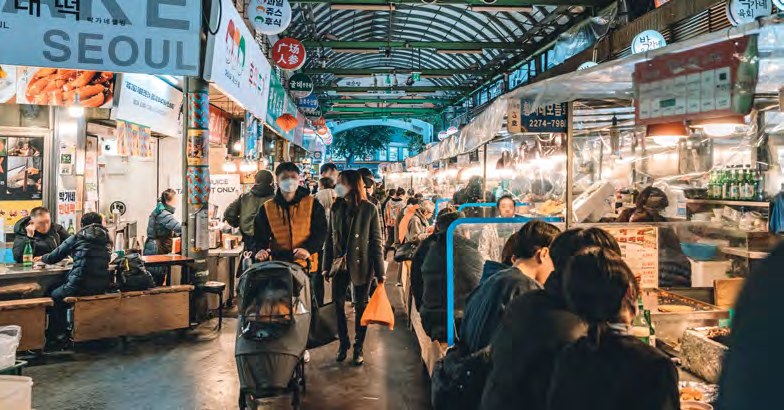
Among the best-known Seoul food markets, choose Gwangjang for iconic snacks and central sightseeing, Mangwon for a more local food-and-picnic route, and Namdaemun for old-school meal alleys combined with serious shopping.
They are not interchangeable. Each market works best at a different time of day and with a different itinerary.
Seoul Food Markets: Quick Comparison
| Market | Best for | Famous foods | Nearest useful station |
|---|---|---|---|
| Gwangjang | First-time market experience | Bindaetteok, gimbap, noodles | Jongno 5-ga |
| Mangwon | Local snacks and river picnic | Dakgangjeong, croquettes, tteokgalbi | Mangwon |
| Namdaemun | Food alleys plus shopping | Kalguksu, galchi-jorim, hotteok | Hoehyeon |
On mobile, swipe left or right to view the full comparison table.
Gwangjang Market: best for a first visit
Gwangjang is the easiest market to add to a palace, Jongno, Cheonggyecheon, or Dongdaemun day. The central food arcade concentrates many recognizable foods in one place, making it efficient when your time is limited.
Start with bindaetteok, then share smaller portions of gimbap, noodles, or dumplings. The market is famous and can feel intensely touristy at peak times, but its scale and history still make it valuable.
- Official hours: general market sections are listed around 09:00–18:00 with Sunday closures; the food alley is listed daily around 09:00–23:00.
- Best time: late morning on a weekday.
- Best nearby pairing: Gyeongbokgung, Changdeokgung, Jongmyo, or DDP.
Individual stalls set their own hours, and some close when ingredients sell out. Use official times as a range, not a guarantee for a specific vendor.
Mangwon Market: best for local variety
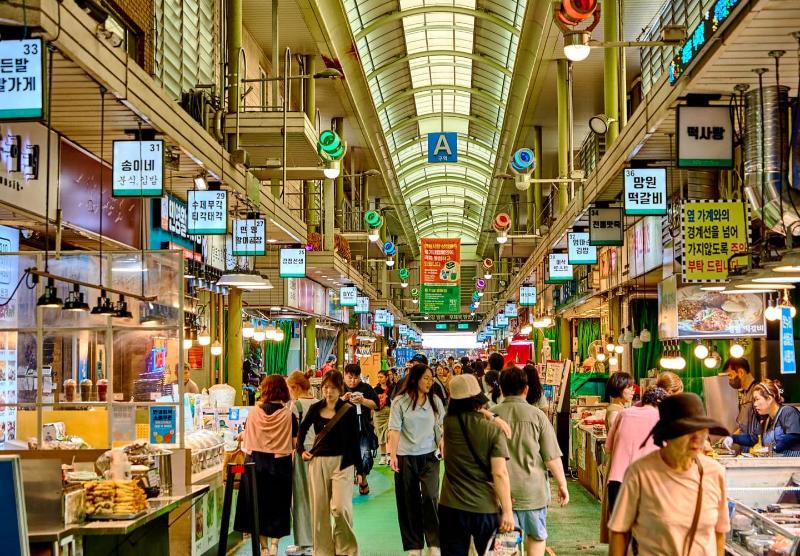
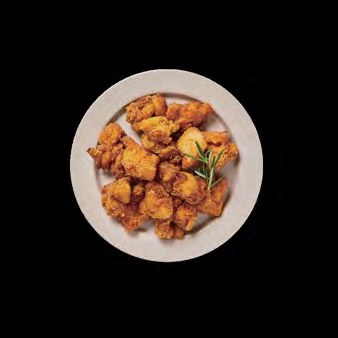
Mangwon is a neighborhood market where prepared food, produce, side dishes, and everyday shopping sit together. Official tourism information highlights chicken gangjeong, croquettes, donuts, tteokgalbi, snacks, and traditional alcohol.
The strongest route is market plus Mangwon Hangang Park. Buy a few portable foods, then continue to the river for a picnic. Do not overbuy before the walk.
- Official visitor listing: approximately 10:00–21:00, varying by shop.
- Best time: early afternoon before a river sunset.
- Best nearby pairing: Mangwon-dong, Hongdae, Yeonnam, or Mangwon Hangang Park.
Namdaemun Market: best for food alleys and shopping
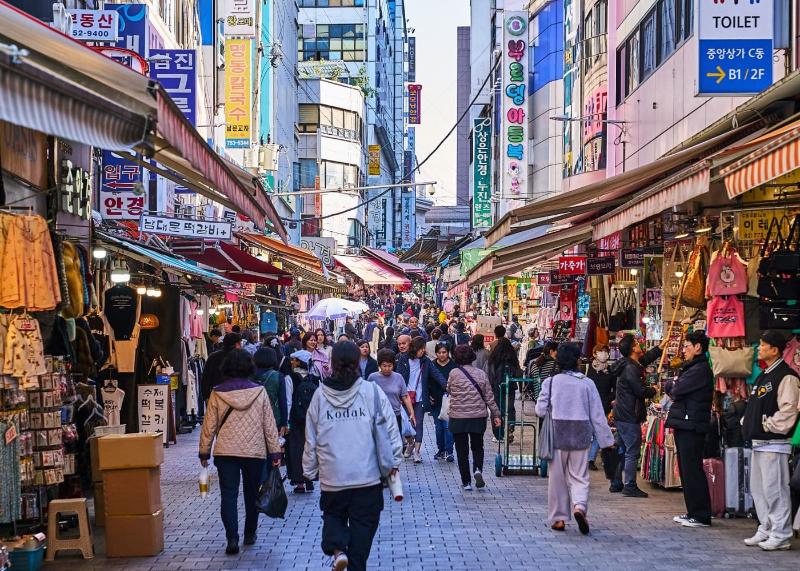
Namdaemun is much more than a snack market. Its thousands of shops sell clothing, accessories, kitchenware, souvenirs, and wholesale goods, while specialized alleys serve complete meals.
Kalguksu Alley
Choose knife-cut noodles when you want a quick, warm, filling meal. Seating is tight and the atmosphere is direct. Pointing at a menu or the dish another customer is eating is common in cramped market restaurants.
Galchi Alley
Galchi-jorim is hairtail fish braised in a spicy-savory sauce. It contains bones and is better for travelers comfortable eating fish carefully. Share it with rice and side dishes.
- Official market listing: weekday hours can extend from midnight to 23:00, but every section and stall differs.
- Best time: late morning for food and daytime shopping.
- Best nearby pairing: Myeongdong, Sungnyemun Gate, Namsan, or Seoul Station.
Which market has the best food?
There is no universal winner. Gwangjang has the strongest instant recognition, Mangwon offers the easiest mix of local shopping and snack discovery, and Namdaemun has the deepest connection between food alleys and a working wholesale market.
- Only one market on a first trip: Gwangjang.
- You dislike the most crowded tourist scenes: Mangwon on a weekday.
- You want a proper meal, not only snacks: Namdaemun.
- You want a picnic afterward: Mangwon.
- You are already touring palaces: Gwangjang.
How to order without stress
- Look for a posted menu and price before sitting.
- Confirm whether the amount is per plate, portion, or person.
- Order one or two items first; you can add more.
- Ask before photographing a vendor at close range.
- Keep small cash available, but cards are increasingly common.
- Return reusable dishes and dispose of waste where directed.
Do not accept food or sit down merely because a seller is calling to you. Choose calmly, and walk away politely if the menu or price is unclear.
Budget and portion strategy
Market food can be economical, but sampling five full portions is not. Set a per-person snack budget, share dishes, and stop for a complete meal only when you are ready to sit. For a broader list, see 20 foods to try in Seoul.
Dietary needs and hygiene
Busy stalls may use shared griddles, fryers, knives, and broths. Vegetarian-looking pancakes or noodles can contain seafood or meat stock. Travelers with serious allergies should use translated allergy cards and select vendors able to explain ingredients clearly.
Choose stalls with active turnover, organized food handling, and hot food served hot. Keep hand sanitizer with you, especially when eating several finger foods.
Uncle Choi’s tip
A market is better when it fits the rest of the day. Do not cross Seoul only to eat one snack you can find elsewhere. Pair Gwangjang with Jongno, Mangwon with Hongdae and the river, or Namdaemun with Myeongdong and Namsan.
Frequently asked questions
Are Seoul markets open on Sundays?
It depends on the market section and individual stall. Gwangjang’s food alley is officially listed as open year-round, while other sections may close Sundays. Always check the specific vendor when it matters.
Can I pay by credit card?
Many vendors accept cards, but not every small stall does. Carry modest cash and confirm before ordering.
Which market is best at night?
Gwangjang’s food alley is the most straightforward evening option. Namdaemun has overnight and wholesale activity, but food and retail sections operate on very different schedules.
Final recommendation
Visit Gwangjang for a classic first market, Mangwon for a neighborhood picnic day, or Namdaemun for food alleys and shopping. Go hungry but not starving, share portions, and make the market part of a geographically sensible route.
Sources & last updated
- Visit Seoul — Gwangjang Market
- Visit Seoul — Mangwon Market
- Visit Seoul — Namdaemun Market
- Seoul Metropolitan Government / Seoul Tourism Organization, 2026 Seoul Guidebook, traditional markets and food alleys
Last fact-checked: August 21, 2026. Individual stall hours, menus, and prices vary.